“`html
Advancements in Space Technology
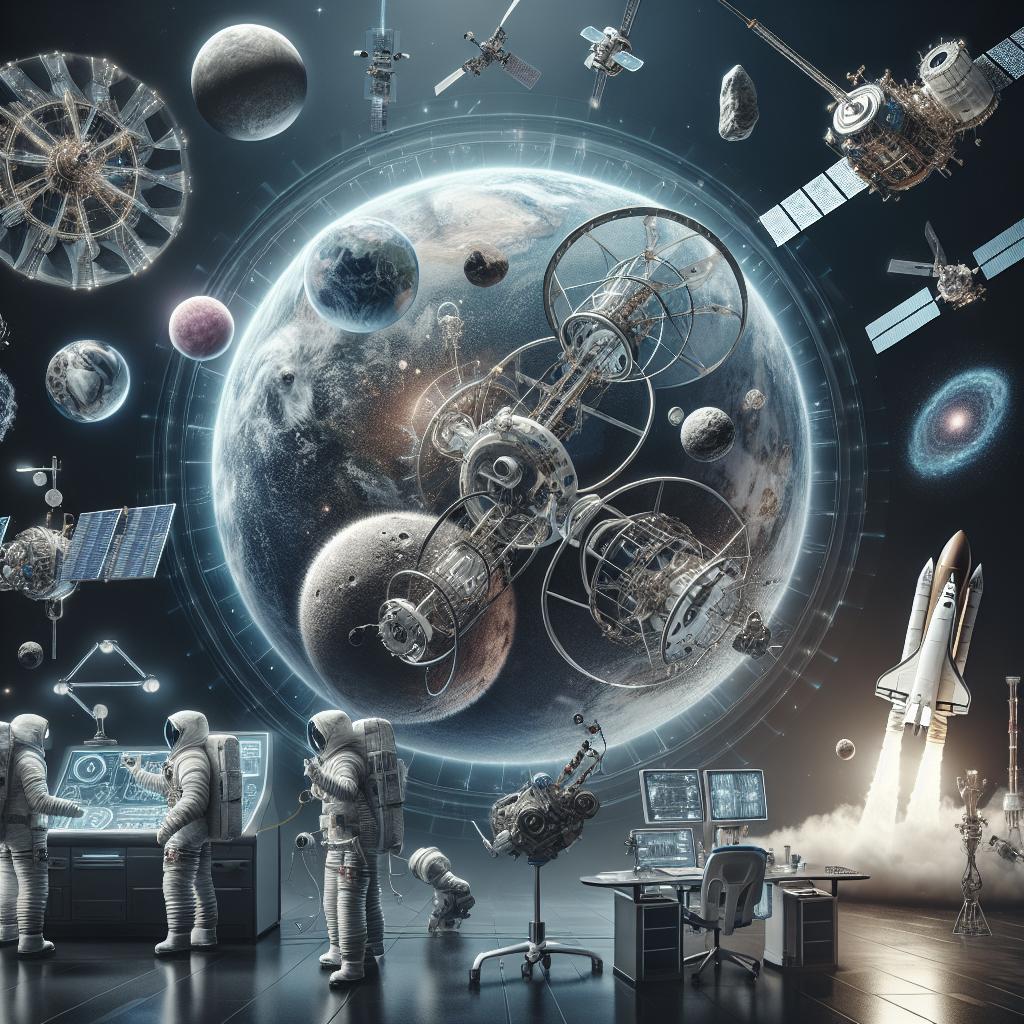
The realm of space technology is ever-evolving, driven by a combination of scientific curiosity, technological innovation, and international cooperation. From NASA’s cutting-edge research to the latest in commercial space travel, these advancements are reshaping our understanding of the universe and expanding the horizons of human capability. This blog post will delve into the latest developments across various areas including NASA technologies, space communications, and robotic advancements. Additionally, we will explore insights into living in space, manufacturing, and student involvement in space challenges. By weaving through the intricacies of this celestial venture, we aim to provide an engaging overview of what the future holds for space technology.
Latest Technology News
The latest updates in space technology news include breakthroughs that promise to enhance both our understanding and capabilities beyond our planet. Companies and organizations worldwide are constantly unveiling new projects that push the boundaries of what’s possible in space exploration. These news offer a glimpse into the cutting-edge innovation occurring in laboratories and space agencies globally.
Emerging trends show a significant interest in sustainable practices in space technology. With the increasing concern over space debris and environmental impact, new technologies focus on reducing waste and improving materials’ sustainability. Such initiatives are critical as the frequency of launches grows and as humanity looks to establish a more permanent presence in space.
NASA Technology
NASA has long been at the forefront of space technology innovation, consistently developing tools and techniques that pave the way for future exploration. Its research spans various domains, including propulsion systems, sustainability practices, and advanced space vehicles designed for deep-space missions. NASA’s technology not only supports its missions but often finds applications in everyday life on Earth.
Current projects at NASA include the exploration of new propulsion mechanisms like electric solar sails and the refinement of thermal protection systems that make atmospheric re-entry safer. These technologies highlight NASA’s commitment to pushing technical boundaries while focusing on reliability and efficiency for future missions.
Explore Technology Areas
NASA’s exploration of various technology areas ensures a well-rounded advancement in multiple fields necessary for successful space exploration. These areas span across entry, descent and landing (EDL) systems, in-space propulsion, advanced computing, and more. Each area is crucial for addressing the unique challenges posed by space environments.
By investing in such diverse technology fields, NASA aims to create a more robust foundation for its exploration strategies, facilitating human and robotic missions to the Moon, Mars, and beyond. These areas of exploration are carefully prioritized to maximize scientific return and ensure the sustainability of future missions.
Ranked Civil Space Shortfalls
As space missions become more ambitious, understanding and addressing potential shortfalls becomes paramount. Ranked civil space shortfalls often highlight areas requiring urgent attention and development, ensuring that missions proceed without undue risk.
These shortfalls range from the need for enhanced space traffic management to improvements in spacecraft shielding from cosmic radiation. Addressing these issues is essential for safeguarding both the equipment and human life involved in extended missions beyond Earth’s orbit.
NASA Awards Students Flight Opportunity in TechRise Challenge
The TechRise Challenge is an initiative by NASA that empowers students across the United States to contribute to space exploration through innovative research ideas. This competition offers students the chance to design, build, and fly their own experiments aboard suborbital spacecraft.
By engaging young minds in space-related projects, NASA not only fosters a new generation of scientists and engineers but also taps into fresh perspectives and novel ideas that can advance future technological progress. It exemplifies NASA’s commitment to educational outreach and innovation.
Technology Transfer and Spinoffs
Technology transfer and spinoffs are integral to NASA’s mission, transforming space technologies developed for exploration purposes into commercial applications that benefit society. Spinoffs include a wide range of industries such as health, transportation, public safety, and environmental monitoring.
Over the years, NASA’s innovations have led to thousands of commercial products and services, from memory foam to advanced water filtration systems. These spinoffs highlight the indirect benefits of space exploration, enriching our lives on Earth through technological progress.
Space Travel
Space travel is no longer confined to government agencies; private companies, with varying business models, have ventured into this frontier, promising to make space accessible to a broader audience. Companies like SpaceX, Blue Origin, and Virgin Galactic are leading the charge.
The goal of many of these enterprises is to reduce the cost of access to space, making it feasible for future tourists. Meanwhile, the focus remains on ensuring safety, reliability, and sustainable practices that allow for a thriving ‘space tourism’ economy.
Living in Space
As humanity’s ambitions extend beyond short-term space missions to more permanent habitation, understanding how to live in space becomes crucial. Key challenges include life support systems, radiation protection, and the psychological well-being of astronauts during extended missions.
Research in this area extends to suitable food production, habitat construction, and exercise regimes that help sustain astronauts’ health during prolonged stays. These efforts are essential for missions aimed at establishing bases on the Moon or Mars.
Manufacturing and Materials
Innovation in manufacturing and materials is critical for the advancement of space technology. From new alloys and composites to 3D printing techniques used on-site, advancements in this area have the potential to revolutionize how we build spacecraft and habitats.
Manufacturing processes developed for space applications often translate into significant terrestrial benefits, providing more durable and sustainable materials that improve the efficiency and reliability of various products on Earth.
Robotics
Robotics is a cornerstone of modern space exploration, facilitating the exploration of places that are difficult or dangerous for humans to reach. The development of highly capable rovers, drone technology, and other robotics aids has revolutionized the field.
Current advancements include robotics that can work autonomously, troubleshoot mechanical issues in space, and even assist astronauts in construction and maintenance tasks on spacecraft or planetary surfaces. These innovations continue to push the envelope of what’s feasible in exploration.
Science Instruments
Science instruments on spacecraft are the eyes and ears through which we conduct our exploration of the cosmos. These instruments provide critical data that inform our understanding of distant worlds and the characteristics of space environments.
The sophistication of these instruments continues to grow, with improvements in resolution, endurance, and the ability to analyze complex data sets. These tools are indispensable in the quest to unveil the mysteries of our universe.
High-Tech Computing
High-tech computing plays a pivotal role in managing the vast amounts of data generated by space missions. Advanced computing systems support everything from spacecraft navigation to interpreting scientific data, highlighting the importance of computational power in space technology.
Innovations in artificial intelligence (AI) and machine learning are particularly impactful, allowing for real-time decision making and enhanced autonomous operations of spacecraft. These advancements are crucial for the success of future deep space missions.
Space Communications
Reliable space communications are essential for mission success, enabling data transmission between spacecraft and Earth. Advances in this field help overcome the challenges posed by distance, signal degradation, and delay.
Innovations like laser communications and internet-like networks across space aim to improve bandwidth and connectivity, paving the way for more robust and efficient communication during future missions.
Station Technology Demonstration
Space stations serve as testbeds where new technologies and systems are evaluated in a space environment. These demonstrations are crucial for understanding how technology performs in microgravity before it’s implemented in larger missions.
Demonstrations on the International Space Station (ISS), for instance, have led to numerous advancements in life support systems, 3D printing, and Earth observation technologies, shaping the future of space exploration initiatives.
Podcasts
Podcasts have emerged as an engaging medium to disseminate information and spark public interest in space technology. They offer in-depth discussions, expert interviews, and the latest updates on space missions and technological breakthroughs.
For space enthusiasts and the general public, these podcasts represent a unique opportunity to stay informed about the evolving landscape of space exploration in a convenient auditory format.
Faces of Technology Videos
The “Faces of Technology” video series brings the stories of those behind the tech innovations at NASA and other organizations to a broader audience. These videos offer a glimpse into the lives and contributions of scientists, engineers, and visionaries pushing space technology forward.
By highlighting personal journeys and achievements, these videos aim to inspire the next generation of space professionals and promote a deeper understanding of the human aspect behind technological advancement.
@NASA_Technology
The @NASA_Technology Twitter handle serves as an essential resource for real-time updates on NASA’s latest tech developments. Followers gain access to news, multimedia content, and live event coverage related to NASA’s technological achievements and projects.
This platform allows NASA to engage with a global audience, fostering dialogue and sharing insights directly from the epicenter of cutting-edge space innovation.
@NASATechnology
Much like its counterpart, the @NASATechnology handle offers a stream of curated content focused on the technical aspects of space exploration, including links to educational resources, interactive features, and detailed program information.
Engaging with these social media platforms helps both educators and space enthusiasts understand and appreciate the complexity and excitement of NASA’s technological endeavors.
NASA Space Tech Channel
The NASA Space Tech Channel offers viewers a deep dive into the engineering and technology that make space missions possible. Through detailed documentaries, interactive content, and expert talks, it showcases the challenges and triumphs encountered by NASA’s technology teams.
As a repository of knowledge and inspiration, the Space Tech Channel appeals to a wide range of audiences, from students and educators to prolific space aficionados interested in the marvels of space exploration.
NASA’s Next-Generation Solar Sail Mission
The forthcoming solar sail mission aims to demonstrate a new method of propelling spacecraft using the pressure of sunlight. This cutting-edge approach could enable missions to reach distant areas in our solar system without traditional fuel.
Solar sails offer a glimpse into a future where space travel becomes more efficient and sustainable, contributing significantly to NASA’s long-term exploratory objectives.
NASA’s New Graphic Novel, First Woman Issue No. 2
NASA’s First Woman graphic novel series celebrates the agency’s commitment to diversity and inclusion, depicting the story of a fictional astronaut’s journey to the Moon. The series aims to inspire and educate readers about the feasibility of women and minorities in space roles.
With engaging storytelling and vibrant artwork, the graphic novel serves as a powerful tool to spark interest in STEM fields among young audiences.
Kellin Slater
Kellin Slater is recognized for his contributions to the development of remote sensing technologies at NASA. His work enhances our ability to monitor planetary environments from afar, providing invaluable data for research and exploration.
Slater’s innovations hold the potential to revolutionize how scientists study and understand complex atmospheric and surface conditions on various celestial bodies.
Amber Soja
Amber Soja’s work at NASA focuses on understanding the Earth’s climate system, leveraging satellite data to analyze various environmental phenomena. Her research plays a vital role in the global endeavor to comprehend and combat climate change.
By applying her expertise in earth sciences, Soja contributes to NASA’s mission of using space-based observations to inform and improve life on Earth.
Emily Gargulinski
Emily Gargulinski is a leading figure in the development of innovative communication systems at NASA. Her efforts ensure that astronauts and robotic missions maintain reliable contact with mission control on Earth.
Gargulinski’s advancements are crucial for the success of both manned and unmanned missions, facilitating seamless data transmission across vast distances.
Ali Guarneros Luna
As an aerospace engineer at NASA, Ali Guarneros Luna specializes in miniaturized satellites and spacecraft systems. Her work supports a wide range of missions, pushing the envelope in terms of size, efficiency, and functionality.
Guarneros Luna’s innovative designs enhance NASA’s ability to conduct diverse scientific explorations in space and offer cost-effective solutions for future missions.
Anjie Emmett
Anjie Emmett plays a critical role in developing autonomous systems used in space exploration. Her research focuses on creating technology that allows spacecraft to operate independently without constant human intervention.
These autonomous systems are pivotal for missions that venture far from Earth, where real-time communication with control teams is challenging.
Prital Johnson
Prital Johnson contributes to the advancement of deep space propulsion systems, which are necessary for longer missions to celestial bodies like Mars. Her work aims to make interplanetary travel faster and more efficient.
Through innovative engineering solutions, Johnson’s efforts support NASA’s overarching goals for Mars exploration and beyond.
Kevin Grossman
Kevin Grossman is involved in developing software tools that enhance mission planning and operations. His contributions facilitate better mission efficiency and effectiveness, critical factors for the success of space exploration.
By optimizing software systems, Grossman ensures that space missions run smoothly and are less prone to unexpected challenges.
Bob Carter
Bob Carter’s focus is on materials science, specifically developing new composites that make spacecraft more resilient and lightweight. His breakthroughs have significantly impacted spacecraft design and manufacturing.
Carter’s work supports the sustainability of future missions, enhancing the performance and longevity of spacecraft operating in harsh space environments.
Final Thoughts
| Topic | Description |
|---|---|
| Latest Technology News | Explores the latest trends and news in space technology, emphasizing sustainability and innovation. |
| NASA Technology | Focuses on NASA’s pioneering efforts in developing new propulsion and thermal protection technologies. |
| Explore Technology Areas | Covers the diverse fields of technology NASA is advancing to support future missions. |
| Ranked Civil Space Shortfalls | Highlights areas needing development for mission safety and success. |
| NASA Awards Students Flight Opportunity in TechRise Challenge | Describes NASA’s initiative to engage students in space exploration through competition. |
| Technology Transfer and Spinoffs | Discusses the commercial applications of NASA-developed technologies. |
| Space Travel | Examines private sector involvement in space tourism and accessibility. |
| Living in Space | Addresses challenges and solutions for extended human habitation in space. |
| Manufacturing and Materials | Highlights advancements in manufacturing techniques and material development for space applications. |
| Robotics | Explores the role of robotics in exploration and mission success. |
| Science Instruments | Discusses the role of advanced instruments in gathering crucial space data. |
| High-Tech Computing | Considers the impact of computational advancements on missions. |
| Space Communications | Covers innovations in communication technology for space connections. |
| Station Technology Demonstration | Explains how space stations test technologies in a real environment. |
| Podcasts | Describes the role of podcasts in spreading updates about space technology. |
| Faces of Technology Videos | Shares how video series celebrate and motivate space professionals. |
| @NASA_Technology and @NASATechnology | Summarizes the importance of NASA’s social media accounts in spreading tech news. |
| NASA Space Tech Channel | Highlights the educational and inspirational aspects of NASA’s tech channel. |
| NASA’s Next-Generation Solar Sail Mission | Explains the mission focused on innovative solar sailing techniques. |
| NASA’s New Graphic Novel, First Woman Issue No. 2 | Presents a graphic novel inspiring future space explorers. |
| Kellin Slater, Amber Soja, Emily Gargulinski, Ali Guarneros Luna, Anjie Emmett, Prital Johnson, Kevin Grossman, Bob Carter | Profiles key contributors to NASA’s technological advancements. |
“`